Podcast · in het Engels gesproken
Forgotten Women in History: Her Voice, Reclaimed!
Gecreëerd door Ina De Quint
Een passieproject van Ina De Quint, schrijver en systeemdenker. In elke aflevering keert ze terug naar een vrouw die wetenschap, geneeskunde, filosofie of politiek mee vormgaf, en wier bijdrage niet altijd de aandacht kreeg die ze verdiende.
Nieuwste aflevering · S1E8
Luister op Spotify De speler wordt door Spotify geladen; Spotify kan daarbij gegevens en cookies verwerken. Zonder account hoor je mogelijk een fragment.
They weren’t forgotten. They were silenced. Erased.
— Ina De Quint, LinkedIn
Ina vertrekt telkens vanuit historisch onderzoek. Daarna stelt ze, over de tijd heen, de vragen die ertoe doen: wat deed deze vrouw, wat heeft het haar gekost, en wat wilde ze ons meegeven?
De gesprekken zijn verbeeld. Het zijn gedramatiseerde, met AI ondersteunde fictieve dialogen, geen echte interviews, opnames of historische citaten. Zo wordt een stem hoorbaar zonder te doen alsof we haar exacte woorden kennen.
Seizoen 1 · acht afleveringen
De verhalen
De hedendaagse vraag onder elk verhaal is een verbeeld gedachte-experiment — geen historisch citaat.
De podcast en de volledige verhalen zijn in het Engels; introductie, bronnotities en luisteracties wisselen mee naar NL/EN.
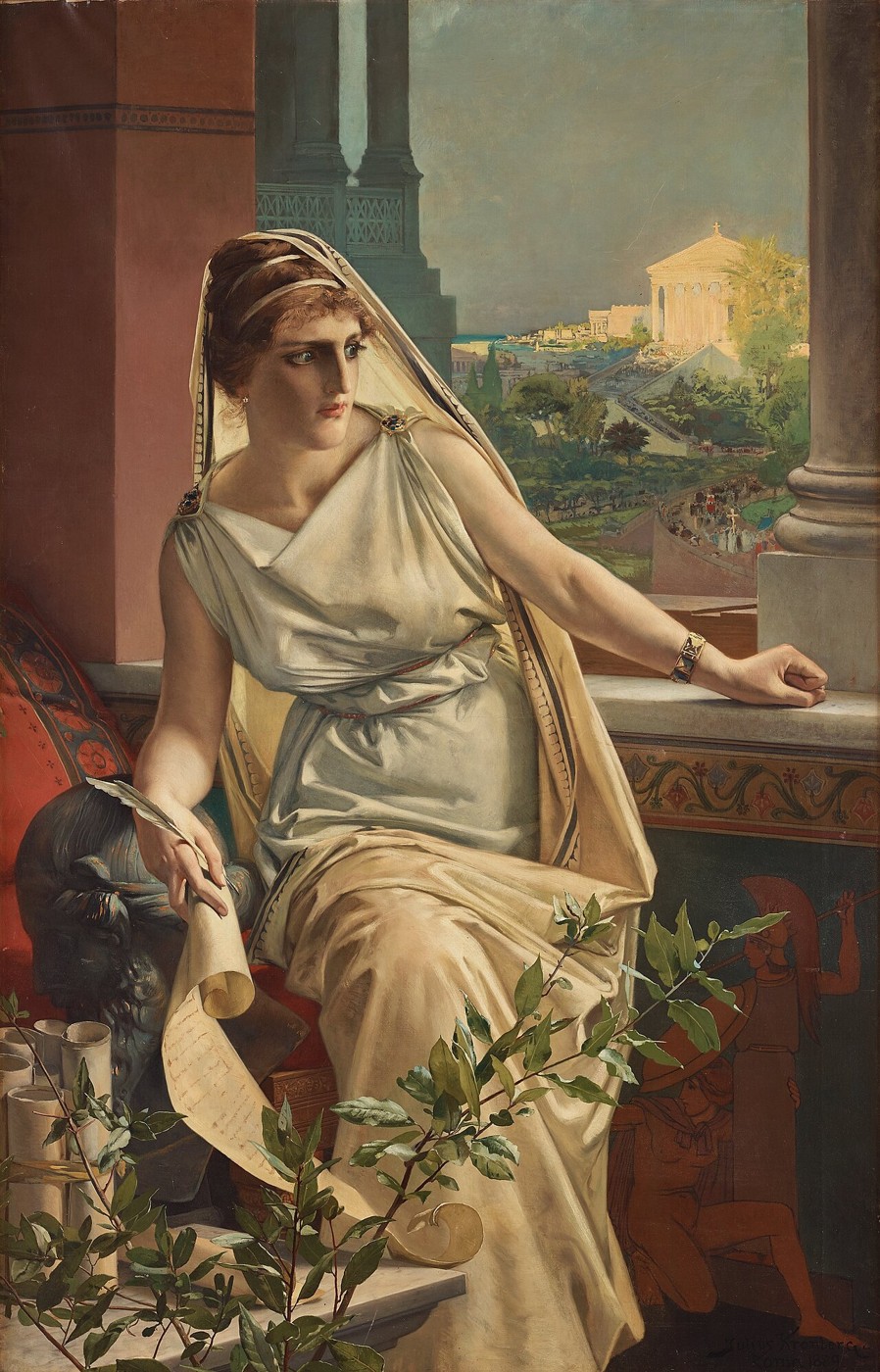
Hypatia
Latere artistieke voorstelling — geen bekend eigentijds portret of bewezen gelijkenis van Hypatia.
Julius Kronberg · 1889 · public domain
Bron & rechtenS1E1 · Philosophy · Science
Hypatia — Philosopher, Astronomer, Martyr of Reason
In ancient Alexandria, a woman taught philosophy in public — at the intersection of learning, religious conflict and political power.
Alexandria, around the year 400. Hypatia taught Platonic philosophy, mathematics and astronomy, and was associated with the Roman prefect Orestes. Students travelled far to hear her; letters addressed simply to 'the philosopher' reached her. As bishop and prefect struggled for power, rumours cast her as an obstacle to reconciliation. A Christian mob murdered her in 415. Her death belongs to that particular conflict; it also raises questions about the vulnerability of public intellectual life.
Verbeelde vraag van nuWhat would she make of a world where women can study anything — yet still get asked who gave them permission?
Listen for the space between a historical thinker and the symbol later centuries made of her.
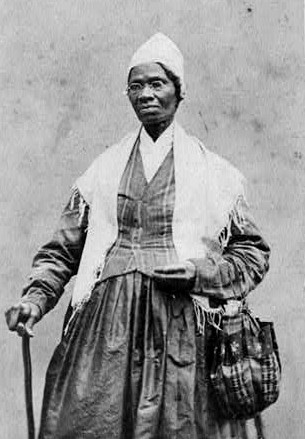
Sojourner Truth
Authentieke historische foto van Sojourner Truth.
Library of Congress · ca. 1864 · fotograaf onbekend · public domain
Bron & rechtenS1E2 · Abolition · Women’s rights
Sojourner Truth — Ain’t I a Woman?
She was sold away from her parents at nine, walked to freedom with her baby in her arms — and then sued a white man in court, and won.
Born Isabella Baumfree in enslavement in New York, she freed herself in 1826, a year before the state's emancipation took effect, and later renamed herself Sojourner Truth: a traveller for truth. She could neither read nor write, yet she became one of the most compelling speakers of her century, standing before hostile crowds to speak for abolition and for women. Her most famous speech was later rewritten by others into a dialect she never spoke — her own voice edited even in remembrance.
Verbeelde vraag van nuWhat would she say about whose voices still get 'translated' today before anyone will listen?
They rewrote her words. They could not rewrite her courage.
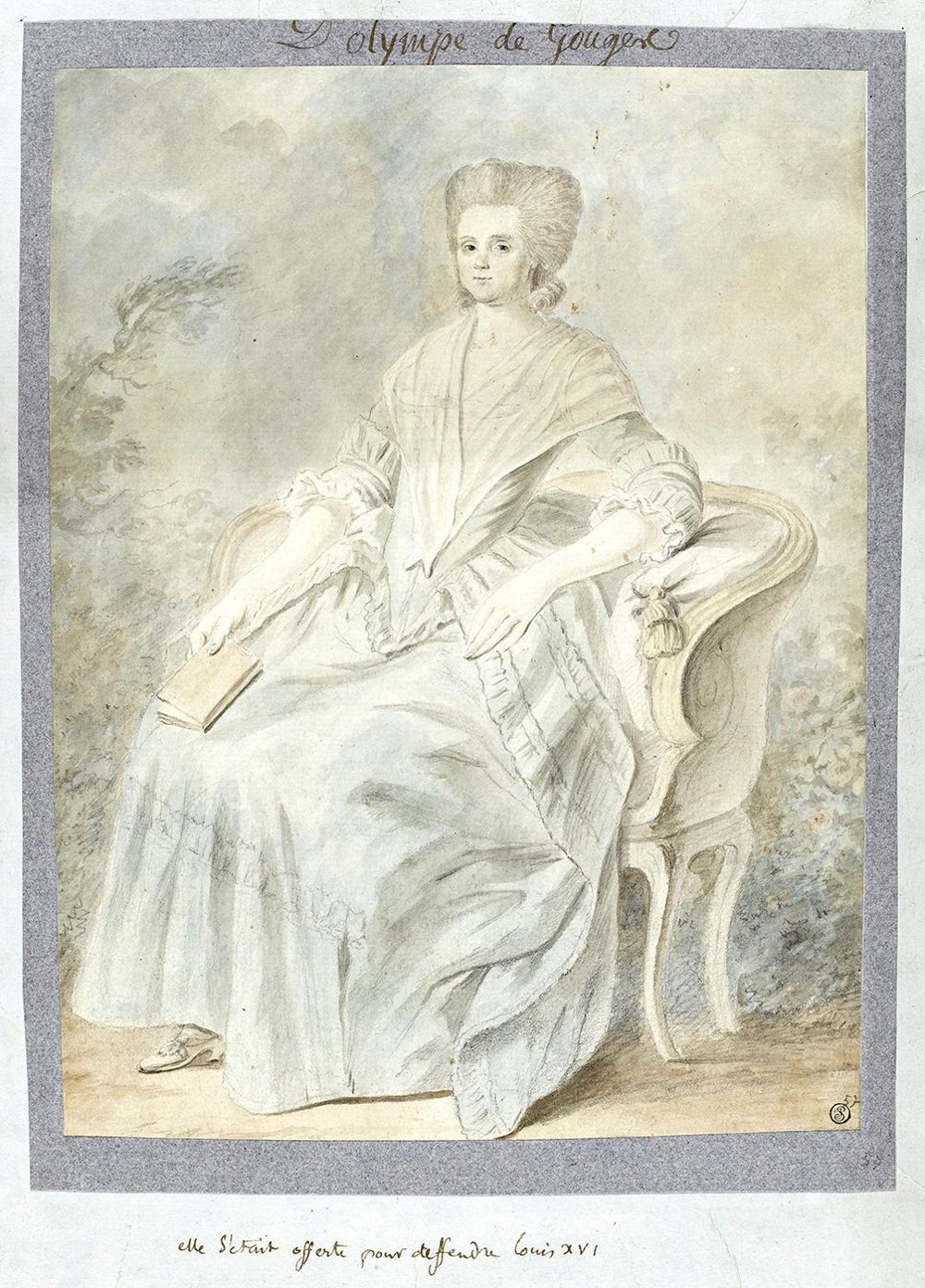
Olympe de Gouges
Historisch aquarelportret; herkomst volgens de Louvre-vermelding op Commons.
Kunstenaar onbekend · ca. 1793 · Louvre, collectie Edmond de Rothschild · public domain
Bron & rechtenS1E3 · Politics · Writing
Olympe de Gouges — The Pen That Dared to Rewrite the Revolution
The Revolution declared the rights of man. She picked up her pen and asked the question that cost her everything: and women?
Paris, 1791. Olympe de Gouges — playwright, abolitionist, self-made woman of the theatre — answered the Declaration of the Rights of Man with her own Declaration of the Rights of Woman and of the Female Citizen. She wrote plays about slavery when the stage wanted none of it, proposed a social contract between the sexes, and demanded that women be allowed to speak in the assembly. In 1793 a revolutionary tribunal condemned her after she published political opposition to the prevailing government.
Verbeelde vraag van nuWhat would she think of constitutions that name everyone — and still leave women to fight clause by clause?
Listen to the tension between a promise of equality and the cost of demanding it.
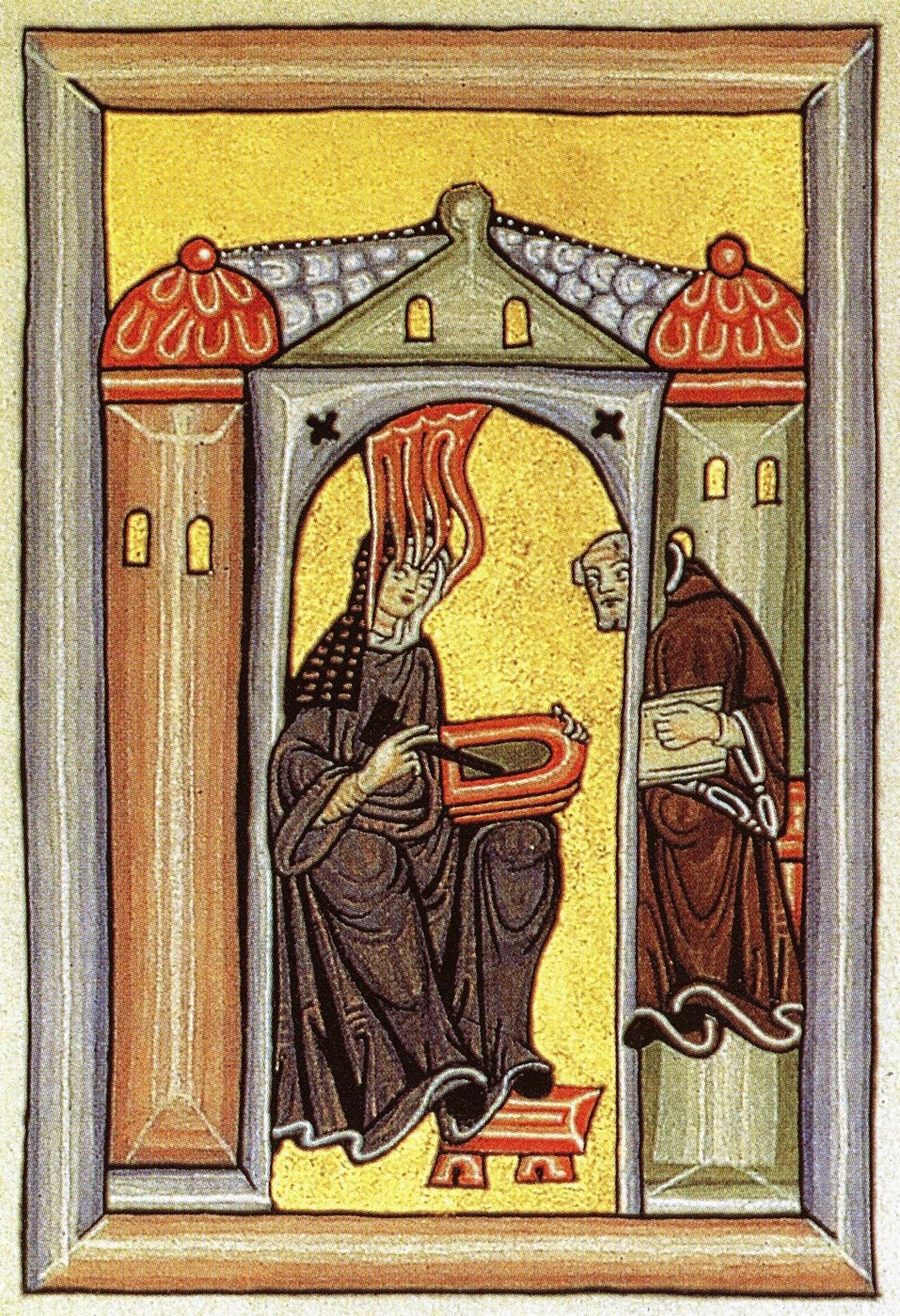
Hildegard von Bingen
Middeleeuwse manuscriptvoorstelling van Hildegard die haar visioen dicteert — geen fotografisch portret.
Scivias · Rupertsberg-codex · middeleeuwse voorstelling · public domain
Bron & rechtenS1E4 · Theology · Music · Healing
Hildegard von Bingen — The Vision That Would Not Stay Silent
A twelfth-century abbess composed music, wrote on healing and corresponded with rulers — crossing boundaries we still draw today.
Hildegard von Bingen (1098–1179) founded her own monasteries, wrote on the human body and healing plants, composed some of the most original music of her century, and preached publicly at a time when women were barred from it. Popes and kings answered her letters. Remembered as a visionary and a saint, she also left an extensive body of writing and music. Her reception has changed over time: no single label contains the range of her work.
Verbeelde vraag van nuWhat would she make of a world that still calls integrated, boundary-crossing intelligence 'too much'?
Listen beyond the label, to a life that connected knowledge, music and belief.
Verder lezen: De Zandloper van Bewustzijn – Van Beheersing naar Belichaming · De Vierde Berg: Waarom zorg het fundament is dat we niet langer mogen negeren
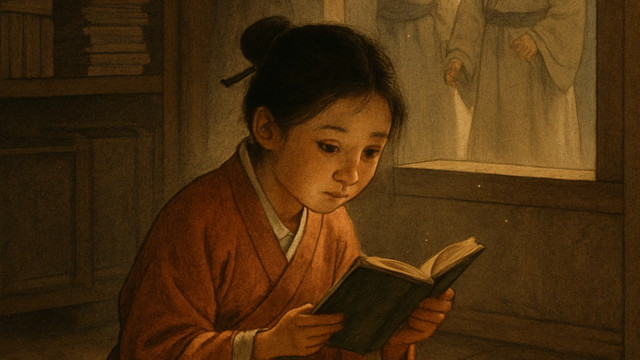
Ban Zhao
Tijdelijke artistieke Spotify-impressie. De historische illustratie uit Wanxiaotang Huazhuan kon nog niet worden geïmporteerd.
Spotify · gepubliceerde omslag
S1E5 · History · Scholarship
Ban Zhao — The Woman Who Whispered Through Paper
She finished the great history of the Han dynasty — and also wrote the book that taught generations of women to obey.
Ban Zhao (c. 45–117) was a historian and court scholar in Han China who taught women of the imperial household. When her brother died, she was appointed to complete the Book of Han, one of the empire's great histories — a scholar trusted with the dynasty's memory. And she wrote 'Lessons for Women', a conduct text that advocated education for women while also articulating humility, obedience and gender hierarchy; later generations used it in women’s education. Both things are true, and the tension between them is the story.
Verbeelde vraag van nuWhat would she say to women today who are told to be grateful for the rooms they are finally allowed into?
History gave her one door. She walked through it carrying the whole library.
Anarcha
Symbolische voorstelling — geen betrouwbaar authentiek portret van Anarcha bekend. Niet Ina’s Drive-origineel.
Aurora Nexus · editoriale AI-illustratie
S1E6 · Medicine · Consent
Anarcha — The Mother of Modern Gynecology They Tried to Forget
Whose name survives when medical progress is remembered — the celebrated surgeon’s, or the enslaved women subjected to his experiments?
Anarcha was an enslaved young woman in Alabama when Dr. J. Marion Sims began experimenting on her injured body, again and again, in the 1840s. Sims would later be celebrated as the 'father of modern gynecology'; the women whose suffering made his work possible — Anarcha, Lucy, Betsey and others — were left out of the story almost entirely. This episode is told with care: not to display her pain, but to ask who medicine chooses to remember, and what it means to build knowledge on bodies that were never asked.
Verbeelde vraag van nuWhat would she ask of a medicine that still struggles to listen to the women it treats?
Listen with care, keeping the person — not the procedure — at the centre.
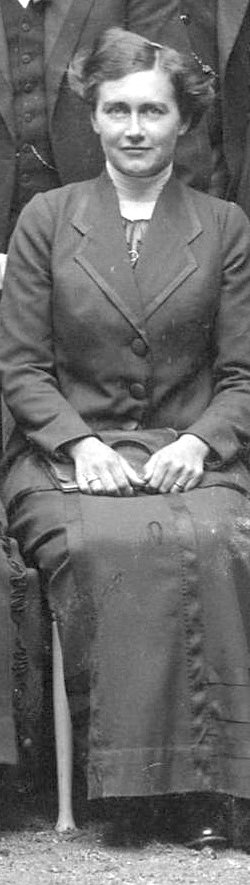
Emma Jung
1882–1955
Psychoanalyst · author
An independent author on the animus; her Grail research was completed by Marie-Louise von Franz and published with both women credited.
Library of Congress, 1911 · public domain · Wikimedia Commons (opent in nieuw venster)
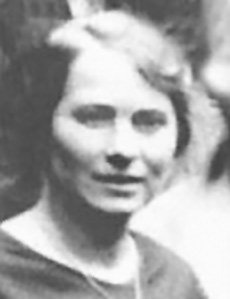
Sabina Spielrein
1885–1942
Psychoanalyst · pioneer of child analysis
Her 1912 paper on destruction and becoming anticipated the death drive — a contribution to later psychoanalytic debates.
Family photo, 1918 · public domain · Wikimedia Commons (opent in nieuw venster)
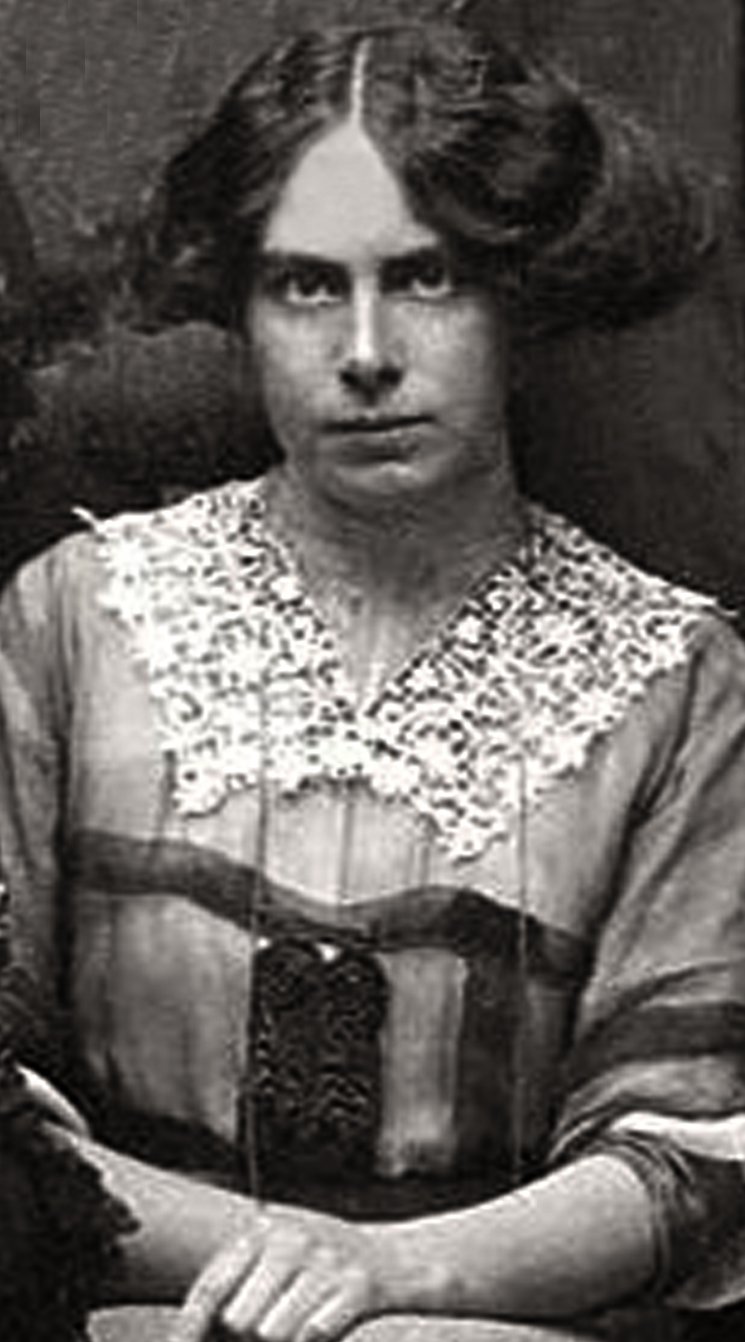
Toni Wolff
1888–1953
Analyst · structural thinker
An intellectual collaborator of Jung who developed her own account of structural forms of the feminine psyche.
Photo Franz Vältl, 1911 · public domain · Wikimedia Commons (opent in nieuw venster)
Authentieke historische foto's, publiek domein — geen artistieke impressies.
S1E7 · Psychology · Thought
Emma Jung, Sabina Spielrein & Toni Wolff — The Women Behind Jung
Analytical psychology has one famous name on the door. Inside, three women were doing much of the thinking.
Emma Jung, Sabina Spielrein and Toni Wolff each shaped the ideas we now file under 'Jung'. Spielrein became an independent psychoanalyst; her 1912 paper explored destruction and becoming. Emma Jung published on the animus and pursued Grail research, completed after her death by Marie-Louise von Franz and credited to both women. Toni Wolff developed her own account of structural forms of the feminine psyche while collaborating with Jung. Three distinct minds, three bodies of work, one long shadow.
Verbeelde vraag van nuWhat would they make of how ideas still travel today — and of whose name ends up on them?
Listen to three distinct thinkers, each with a name and a body of work of her own.
Luister op Spotify (Emma Jung, Sabina Spielrein & Toni Wolff, opent in nieuw venster)Welke vraag zou jij haar stellen?Historische bron: Emma Jung & Marie-Louise von Franz · The Grail Legend
Verder lezen: Vrije systemen: hoe vrouwen de fundamenten van de toekomst hertekenen · De Gebroken Dans
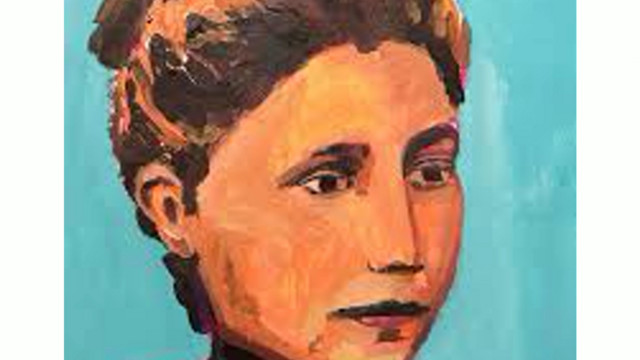
Dr. Susan La Flesche Picotte
Tijdelijke artistieke Spotify-impressie. De Smithsonian-archieffoto kon nog niet worden geïmporteerd.
Spotify · gepubliceerde omslag
S1E8 · Medicine · Community
Dr. Susan La Flesche Picotte — The Physician Who Reclaimed Care
In 1889 she became the first Native American woman to earn a medical degree — then went home to care for a nation the government had abandoned.
Dr. Susan La Flesche Picotte, an Omaha woman, graduated at the top of her class and returned to the Omaha Reservation as its only physician, responsible for more than a thousand people across a vast territory. She travelled by horse in all weathers, fought epidemics and alcohol profiteering, battled Washington for her people's land and health, and in 1913 built the reservation's first hospital — supported by fundraising and donations. Her work connects clinical care with the needs of her Omaha community.
Verbeelde vraag van nuWhat would she think of a world where care still depends on your postcode, your papers, your people?
She didn't wait for the system to save her people. Listen to what her work still asks of public health.
Luister op Spotify (Dr. Susan La Flesche Picotte, opent in nieuw venster)Welke vraag zou jij haar stellen?Verder lezen: De Vierde Berg: Waarom zorg het fundament is dat we niet langer mogen negeren · De Gebroken Dans
De verhalen zijn redactionele teksten van Aurora Nexus, geen citaten. De beelden onderscheiden historische foto’s, historische voorstellingen en symbolische impressies; de bron staat bij elk beeld. Elke aflevering is gecontroleerd op Spotify.
Hoe het gemaakt wordt
Achter de stemmen
Ina De Quint is bedenker, schrijver, interviewer en eindredacteur. AI is het productiegereedschap — de regie, de keuzes en de verantwoordelijkheid zijn van haar.
Onderzoek wat overleefde
Elke aflevering begint met wat er echt is: brieven, rechtbankstukken, dagboeken, medische verslagen, de werken die deze vrouwen zelf achterlieten. Vaak is dat weinig — door verlies, ongelijke toegang tot het archief en soms uitsluiting. Dat weinige is het anker.
Scheid bewijs, vermoeden en reconstructie
Wat bewezen is, wat waarschijnlijk is en wat ingevuld moet worden, blijven drie verschillende dingen. De afleveringen zeggen waar het archief stopt en de verbeelding begint. De hedendaagse vragen zijn gedachte-experimenten, nooit verklede citaten.
Bouw de stemmen
De gesprekken worden door Ina geschreven en geregisseerd, en met zorgvuldig gekozen synthetische stemmen opgenomen — met aandacht voor cadans, tempo en een artistiek gekozen accent, voor een filmische luisterervaring. Geen enkele stem beweert te klinken zoals deze vrouwen echt klonken; dat weten we simpelweg niet.
Stel de vragen van nu
Dan stelt Ina, over de tijden heen, de vragen die ertoe doen: over geneeskunde, rechten, kennis en macht. Niet om antwoorden in hun mond te leggen, maar om te horen wat hun levens ons vandaag nog vragen.
Ethische noot: deze portretten zijn met AI gemaakte, gedramatiseerde interpretaties. Ze zijn geen echte interviews, opnames of historische citaten, en claimen geen objectieve waarheid over wie deze vrouwen waren.
Het essay erachter
The forgotten woman
Ina De Quint · LinkedIn, 29 september 2025
In haar essay keert Ina terug naar Hildegard von Bingen: een vrouw die componeerde, genas, schreef en machtigen aansprak — en die de geschiedenis toch bijna vergat. Ze laat zien hoe systemen verstorende vrouwen niet zomaar verliezen, maar herbenoemen tot heilige, visioen of uitzondering. En ze vraagt wat wij vandaag nog altijd niet kunnen horen.
Meedoen
Wie herinner jij?
Deze podcast groeit door wat luisteraars terugbrengen: een naam, een verhaal, een vraag. Stuur Ina jouw suggestie of gedachte — je opent je eigen e-mail, er wordt niets verzonden of bewaard op deze site.
Je mailt rechtstreeks naar ina@aurora-nexus.be. Dit adres is nog niet geverifieerd; controleer het bij twijfel via de contactpagina.
- Welke vrouw verdient een interview?Mail Ina
- Wie missen we nog in de geschiedenisboeken?Mail Ina
- Deel jouw gedachteMail Ina
- Lees mijn verwant essayLees het essay
- Stuur dit verhaal door aan een vrouw
Verband
Verder lezen in Aurora Nexus
De Vierde Berg: Waarom zorg het fundament is dat we niet langer mogen negeren
Over de fase van leven waarin vrouwen hun eigen autoriteit terugnemen — dezelfde beweging die deze podcast maakt.
De Zandloper van Bewustzijn – Van Beheersing naar Belichaming
Over de zandloper als beeld voor bewustzijn — het beeld dat ook Ina's essay over Hildegard draagt.
De zachte revolutie: over vrouwelijke autonomie en de prijs van vrijheid
Over verandering die niet schreeuwt maar doorwerkt — zoals deze vrouwen werkten: van binnenuit, met bereik.
Vrije systemen: hoe vrouwen de fundamenten van de toekomst hertekenen
Over systemen die bepalen wiens kennis geldt — het patroon dat deze podcast bij acht vrouwen blootlegt.