A city government
Would your city explore one defined area and six months of weekend nights with us, and consider a structural public share?
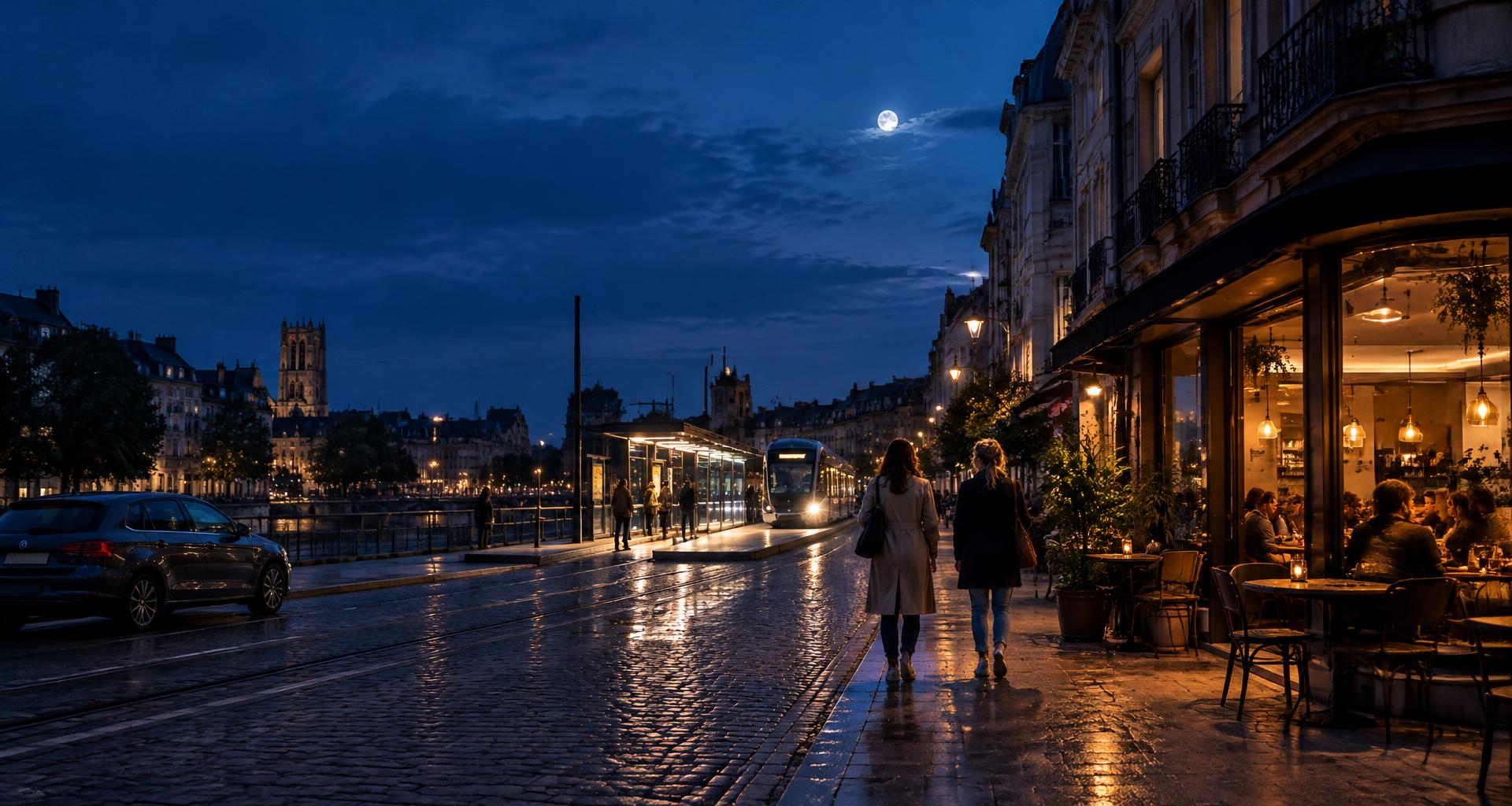
Freedom begins when you no longer have to adapt yourself.
24/7 free, safe rides for women under 25: the end ambition. Starting with getting home safely on weekend nights. A light for people who want to help build it.
Discover the ride model How the ride fund worksNow · partners for a first pilot
The model has been worked out. To test it in one city, four links are needed. There are no confirmed partners yet.
Would your city explore one defined area and six months of weekend nights with us, and consider a structural public share?
Could free rides for the target group and a voluntary opt-in donation technically fit into your existing app and checkout?
Would you think with us about the ride fund: governance, accountability and a first seed contribution after a feasibility study?
What does fairly paid night work require for you: pay, rest periods, insurance, training and safety?
01 / Why
Taking a class.
Working a late shift.
Staying a little longer.
Freedom also lives in everyday journeys. Being able to study, work, meet friends and get home without the question of transport shrinking your choices in advance.
Be Safe, Girl! wants to organise safety, freedom of movement and care as a shared responsibility. An international social movement in the making, starting from a very concrete question: what if accessible mobility weren't only your problem?
Protest and awareness matter. This movement wants to add something tangible: collaboration that makes care practically and financially possible.
02 / The mechanism
The system has been worked out: existing platforms connect young women with professional female drivers. A shared ride fund covers the cost. Safe Hubs offer a possible local link. Partners, funding and delivery have yet to be arranged.
Requesting a free ride within a future partner platform, first on weekend nights around getting home from a night out. With carefully screened professional female drivers. There are no platform agreements or bookable rides yet.
A large structural public share and voluntary private contributions come together in a ride fund. It pays the full ride cost for women under 25, including fair pay for drivers. No budget has been set.
Possible Safe Hubs, clear safety procedures and voluntary ride sharing where route and safety criteria fit. Shared care, without quietly handing care back to women.
03 / Six building blocks
The end ambition: 24/7 free, safe rides for women under 25 through existing mobility platforms. First, a pilot still to be organised on weekend nights around getting home safely from a night out; nothing is available today.
Carefully screened professional female drivers, with training, insurance and attractive, fair pay. Experienced older women may also want to explore this work; no one is automatically available to provide care.
Safe Hubs as possible anchor points in hospitality venues and public spaces: a recognisable place to ask for support. Agreements, staffing and responsibilities need to be worked out first.
A large structural public share, topped up by voluntary checkout donations through participating mobility platforms and possible foundations or sponsors. Together they cover the full cost of free rides for the young target group.
A clearly defined pilot to test demand, accessibility and delivery. Existing apps, local hubs, the website and social channels would make the connections.
Stories, campaigns and shared knowledge can sharpen the model. No story is offered as proof of an effect that has not yet been researched. But there is room for different experiences.
04 / Safe Hubs · future partner concept
A café. A public place. A recognisable point of contact along the way. Not as a promise of rescue, but as one link in shared care.
Safe Hubs are a proposal for collaboration with hospitality venues and public spaces. What support means, who can be reached and how people are referred onwards all need to be designed together first.
There are no participating hubs or formal certification yet. Training, accessibility, staff workload and emergency procedures are research questions, not settled facts.
05 / Economic freedom
Being able to take a late shift. To attend a course. To join in social life. The intended impact goes beyond the journey itself: it is about access to opportunity and a human view of the right to mobility.
The end ambition is 24/7 free, safe rides for women under 25 — not up to and including 25. First, getting home safely on weekend nights; after evaluation, possibly other nights and eventually day and night. This is not a current offer; target group, feasibility and legal framework all need to be tested.
Deciding for yourself when you leave. As a parent, knowing your daughter is home safe without having to wait up or play taxi every time. An accessible alternative to depending on a designated driver, an unreliable late-night lift or driving after drinking. No ride can guarantee absolute safety.
06 / The ride fund · proposed model
Cities, municipalities or regions make safe night-time mobility structurally possible.
Anyone taking a paid ride through a future partner platform can round it up or add a gift. Nothing ticked in advance.
Professionally driven and fairly paid, free of charge for women under 25.
€18.40 €19.00
‘Round up my ride’ = €0.60 for the ride fund. An illustration, not a real fare or payment feature.
Commercial women-driver options, such as the model type often referred to as Pink Taxi, offer a choice within paid transport. This proposal puts the emphasis on socially funded access for young women, intergenerational involvement and Safe Hubs. That is a comparison of model types, not a statement about the prices or operations of any specific provider. Complementary to existing initiatives, not above them.
07 / A first pilot · to be explored
Possible starting locations from the original vision, not confirmed participants.
The proposed pilot focuses on getting home safely on weekend nights, over 6 months. Not serving a whole city around the clock straight away, but carefully trialling and evaluating a clearly defined model.
No current start date has been set. Earlier planning years are not a commitment for today. Feasibility, legal review and partners who genuinely want to help build come first.
Under 25 includes minors. Consent, age-based access, vulnerability, supervision where needed and data protection must be reviewed legally and practically. No access policy has been set.
Voluntary opt-in only, suitable routes and tested safety criteria. Planning, agreed drop-off points, traceability, consent, privacy and clear procedures come before efficiency.
Who does the model reach, and who not? How can a gender-focused design be inclusive, legally sound and careful towards trans women and gender-diverse people?
What funding can make rides accessible without passing costs on to drivers or to unpaid care?
What training, checks, insurance, complaint routes and emergency procedures are needed? No ride or place can promise absolute safety.
How do we evaluate reach, affordability, experiences and working conditions with minimal data and clear consent?
From developed proposal to delivery
Research demand, accessibility, capacity and real cost drivers. Who falls within the target group, which transport barriers apply, and how does the model stay inclusive and legally sound?
Approach cities, municipalities, regions and possibly other levels of government for structural funding. Explore agreements for a clearly defined pilot with existing mobility platforms, possible hubs and private funders.
Work out permits, professional driving work, insurance, screening, training and safety procedures. Have data protection and access for minors legally reviewed before any ride can be offered.
Pool public funding and voluntary private contributions, with transparent governance, oversight, spending rules and accountability. Integrating donations into existing checkouts first requires agreements and technical review.
A proposed pilot around getting home safely from a night out: evaluate reach, availability, waiting times, costs, experiences, complaints and incident handling, privacy and driver pay. No promised outcome and no fixed start date.
Based on the evaluation, decide on other nights, locations and eventually day and night. The end ambition is 24/7; expansion depends on safety, capacity, funding and demonstrably workable delivery.
Under 25 includes minors. Consent, access, vulnerability and privacy require separate legal review and clear safety agreements. No age-based access or roll-out has been decided.
Hard conditions · before any future pilot
None of these points is arranged or operational today. They are conditions: without this foundation, not a single ride takes place.
The right licence category, passenger transport permits and local rules for paid passenger transport.
Careful, legally permitted screening and training of every driver.
Cover for passengers, drivers and vehicles, including shared rides.
Night work with appropriate pay, breaks and workable schedules.
Minimal data, restricted access and fixed retention periods, legally reviewed.
A ride is only shared with explicit consent and when route and criteria fit.
Agreed, well-lit and accessible pick-up and drop-off points.
Clear lines of contact, escalation and follow-up for incidents or complaints.
Access, parental consent and vulnerability require separate legal review.
Careful conditions reduce risks. No transport model can guarantee safety.
By women, for women · possible driving work
An active grandmother or an experienced retired woman might also want to do this professional work. A meeting between generations, room for meaning and attractive pay — not a new unpaid duty of care.
Anyone who drives must be carefully screened, trained and insured, with the right licence category and permits. Suitable working hours, night pay and fair working conditions are part of the model. Volunteers must never be used as unpaid drivers.
The connection with Ina's essay De Vierde Berg (The Fourth Mountain, in Dutch) is editorial: the social value of care and the experience of older women. The essay does not describe a transport service; this proposal translates its question into possible paid work, without any biological duty of care.
Read De Vierde Berg (Dutch)Choosing a female driver is not a judgement about male drivers or their background. Careful professional conduct, not gender alone, contributes to safety.
Future scenario · the service does not exist yet
A 21-year-old woman wants to get home on a Saturday night out. In a future partner platform she sees a free ride for women under 25, within the conditions of the pilot. She chooses when to leave; even in this scenario, availability depends on capacity.
She can choose to share her ride with other women. Only if route, timing and safety criteria fit. Agreed drop-off points and conditions are clear in advance; without her consent, her ride is never shared.
A carefully screened female driver accepts the ride. Training, insurance and the right licence category and permits are preconditions. A recognisable ride, safe pick-up and agreed contact and emergency procedures are part of the design.
The ride follows the agreed route and drop-off point. Traceability and follow-up require privacy-conscious design, limited access to data and fixed retention periods. The ride fund covers the cost; in this proposed model the young woman pays nothing.
A public call · please share it
“The next time my daughter wants to get home, her safety shouldn't come down to luck.”
Help make her ride possible.
08 / Founding lead
An initiative of Aurora Nexus.
Be Safe, Girl! takes a question from Aurora Nexus onto the street: how can something carried personally become a shared social responsibility?
The lighthouse beam prescribes no one's route. It makes visible where people can find each other to build something. Ina is the initiator; the movement needs the knowledge and commitment of others.
The concept was recorded by the initiator through a BOIP i-DEPOT (5 years), as confirmed by Ina. An i-DEPOT records and dates the idea. It is not a patent, a trademark registration or an exclusive right to the concept.
No deposit number or exact start date is given here. Comparable options with female drivers exist; this proposal focuses on social funding and shared care, not on a claim to worldwide uniqueness.
09 / The invitation
An idea, a skill, a place, a different view. You don't need to know the whole model to ask a meaningful question.
Choose your role, add a sentence if you like, and open your email. Subject and text are ready.
Only share a short, non-confidential note. No names of others, identifiable experiences, incident details or sensitive information.
Subject: Be Safe, Girl! — An idea for Be Safe, Girl!
Dear Ina,
I would like to share an idea for the Be Safe, Girl! mobility and care model.
I understand that Be Safe, Girl! is in development. This is an invitation to talk, not a booking, registration or confirmed partnership.
Kind regards,
You send it yourself, from your own email program. This page sends and stores nothing. Recipient: ina@aurora-nexus.be
Historical concept documents and the further system vision, confirmed by initiator Ina De Quint. A fully developed concept and business model; pilot partners, funding and delivery have yet to be arranged. Not an operating ride service.