About Aurora
Experience deserves a place in the conversation.
Why
Knowledge about care, relationships, work, loss and beginning again is often passed on informally. Sometimes it stays isolated. Sometimes it disappears, because no one writes it down or takes it seriously.
Aurora Nexus is building a freely accessible collection. Alongside it we are developing Female Lodges: a contemporary proposal for recurring meeting places where women of different generations share experience, guide one another and explore what their knowledge might mean for their community — inspired by documented forms of female authority and intergenerational transmission, and still in development.
Personal experience is a point of departure, not a destination. By laying stories side by side, asking questions and drawing on sources, we see more sharply what touches one person — and what a system asks of us.
The name
Light, connection, orientation.
- Aurorathe first light
- The moment something becomes visible that was there all along. Often just when an old form no longer holds and a new one has yet to be named.
- Nexusthe connection
- Knowledge does not arise in individuals alone. It also arises between experiences, between generations, between disciplines and perspectives that rarely meet.
- The lighthouseorientation, not instruction
- A lighthouse does not tell you where to go. It casts light, so that routes, rocks and possibilities come into view. An image for what we attempt — never a claim to own the truth.
Founder
Ina De Quint
Writer, sociologist, systems thinker.
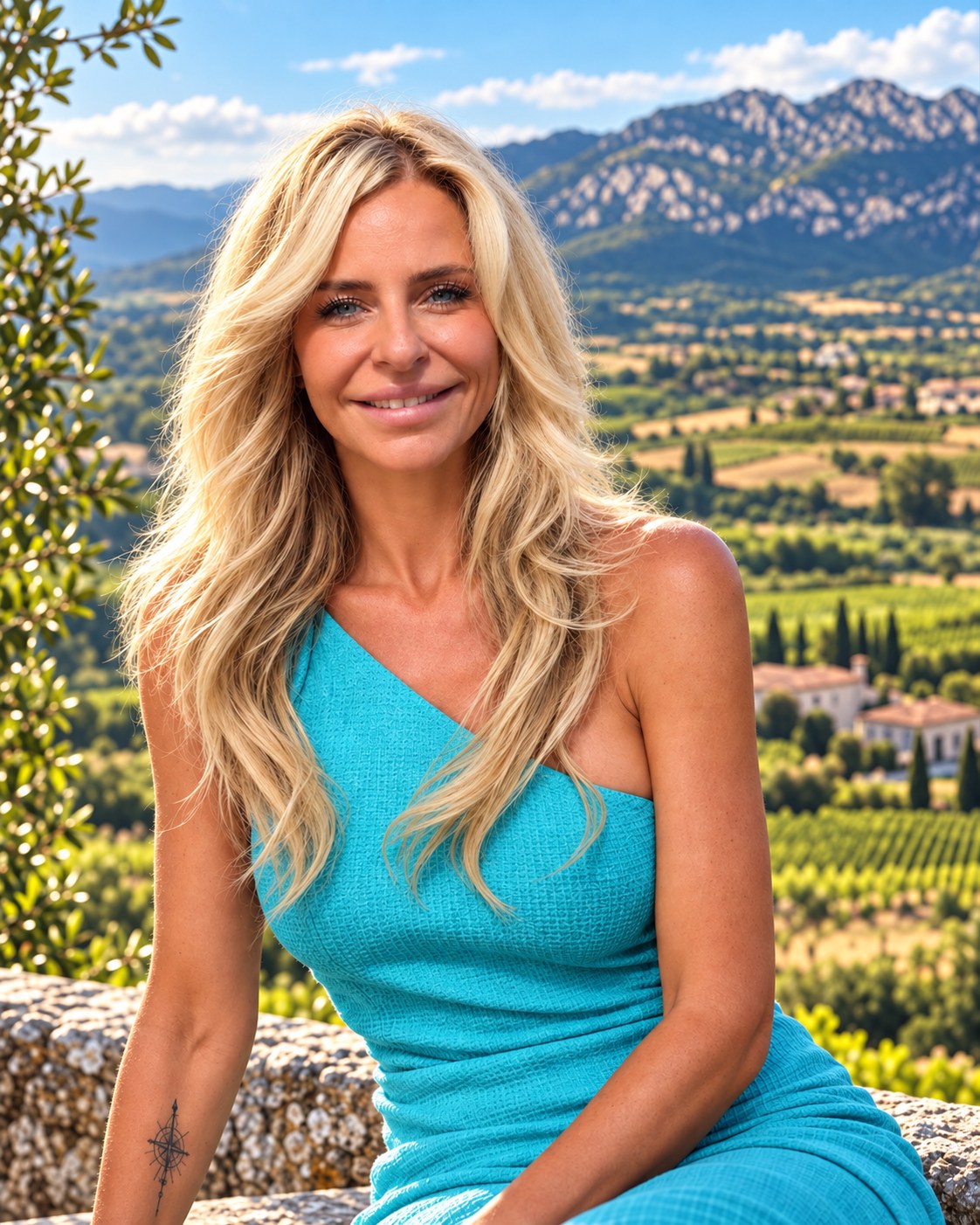
My work begins where the questions become real. Where old certainties no longer work and a new form is not yet in sight.
I am a writer, sociologist and systems thinker, with a background in the sociology of work and organisations, and in entrepreneurship. I look at relationships and lines of tension: what gets stuck, which structures keep it that way, and where something different might begin?
With Aurora Nexus I want to connect experiences to larger questions in society. My perspective is one voice among many. The intention is that the knowledge and stories of other women find a place here too.
My childhood · Published in Kwetsbaar Krachtig (2018)
What love means
“Carefully testing the waters, on tiptoe, taking the temperature of the room.”
“I think that is love. Of that, I am quite certain.”
“I think that is not love. Of that, I am quite certain.”
A child cannot always distinguish love from the ways it learns to keep that love safe. It learns to read silences, anticipate moods and keep secrets. Only later do words emerge for what once seemed normal. But how do you speak about that uncertainty without reducing the mother you love to her vulnerability?
About this contribution
In “Wat liefde is” (“What love means”), I write about growing up as the daughter of a mother living with mental health challenges. From the perspectives of the child I was and the adult daughter looking back, I explore how closeness and fear, loyalty and confusion could coexist — and how understanding grew without erasing the past.
Full original text in Dutch · published in 2018
Ina De Quint · “Wat liefde is” · in Kwetsbaar Krachtig (WonderWijven vzw, 2018)
Personal
Where my search becomes personal.
Later in life I discovered that my biological grandfather was the son of a Lakota woman. With that, my interest in Indigenous knowledge and women's wisdom took on a personal meaning as well. A part of my family history came into view that I had not known before.
That ancestry raises questions for me. About what is handed down and what is lost. About how a community keeps its knowledge. About the women who carry, teach, advise and give direction — and about the place they are given as they grow older.
I want to come to know this history and to study it. My ancestry is a connection, not proof that I already hold the knowledge of a culture. Wisdom asks for encounter, study, experience and a willingness to let your own assumptions change.
From that personal line my research reaches further: into the role of women in matriarchal and matrilineal societies, into forms of shared authority, and into the ways generations can carry one another without holding one another in place. These are different traditions and orders, each asking for its own context.
What interests me is how such insights might help us develop healing, contemporary ways of living together. Here, in our neighbourhoods, organisations and institutions. With care for the people and communities we learn from.
Background on Lakota values, including wisdom sought over a lifetime and respect for elders: Akta Lakota Museum — Seven Lakota Values (opens in a new window).
A philosophical proposition by Ina De Quint
The future is female.
With that sentence I name a direction. A choice for a different order of thought.
By feminisation I mean that we take qualities which have been named feminine — often handed off to women and at the same time undervalued by society — and make them the foundation of how we live together: care, reciprocity, relational intelligence, receptiveness, the capacity to hold what is many-sided, and responsibility for those who come after us.
Every person can develop these qualities. They gain meaning in how we act and how we organise our society.
- Whoever decides listens to the people who bear the consequences.
- Whoever calculates value also counts care, repair and what the earth can carry.
- Whoever defends freedom builds the conditions in which people can truly choose.
- Whoever leads makes room for the judgement and autonomy of others.
System, self-examination, form
This is where feminisation meets my work as a systems thinker. My question is how we can build structures in which people keep what is their own while staying connected. Where care becomes the responsibility of the whole. Where boundaries are clear and power can be called to account.
That also asks for critical self-examination. Women can exercise control. Care can keep someone dependent. Softness can disguise power. A circle can repeat the very exclusion it set out to break. That is why every new form must make room for difference, for dissent and for the right to leave.
Female Lodges are one place where I want to explore and practise that different order of thought. Women bring lived experience together, question what they know and develop insight that can carry through into their community.
The body of ideas lets thoughts and stories travel. The Lodges give encounter continuity. Initiatives such as Be Safe, Girl! explore how care and freedom can take concrete form in society.
Aurora Nexus is the connection between these movements: casting light on what stayed out of sight, letting knowledge move between people and bringing new possibilities into view.
Female Lodges and Be Safe, Girl! are in development.
Method
From one life to a question for the whole.
- 01
Experience
What someone lives through counts as knowledge. It is where a question becomes real.
- 02
Pattern
Placed side by side, experiences show what recurs, and what remains an exception.
- 03
System question
Which rules, habits and distributions of power keep that pattern in place?
- 04
Possibility
Only then does it become clear what could be different: a conversation, a form, a proposal that can be tested.
Sustainable enterprise
An economy that carries what it uses.
Running businesses taught Ina how closely value and vulnerability sit together. A company can grow on work nobody counts: care at home, overtime that seems self-evident, relationships that hold the whole together. Only when that work disappears does it become clear what it was carrying.
For her, sustainable enterprise means that a business accounts for what it consumes in people, time and environment, and that failure is information rather than disgrace. The bankruptcy she went through herself is an experience to examine, not proof of how it goes for everyone.
Feminisation, read critically
An order of thought, not a trait of women.
Feminisation as Aurora uses it says nothing about what women supposedly are by nature. It names qualities that have historically been set aside as feminine and therefore undervalued, and asks what changes when they help determine how we organise, govern and count.
That is why criticism belongs to it. Female forms of authority can exclude too. Care can keep people small. In this reading, female wisdom is not a possession but a practice: attention, memory, the capacity to hold contradiction, built through experience and open to every person.
Reciprocity and dissent
Knowledge that must be able to flow back.
Whoever learns from the experience of others takes something. Active reciprocity means that something returns: recognition, attribution, a say in how a story appears, and room for those who see it differently.
Dissent is therefore welcome. An idea that cannot bear a counter-voice becomes a conviction. Aurora wants to be a place where you can say that a text does not hold for your life, and where saying so makes the text richer.
Restraint
Careful with what we claim.
A personal story can clarify a great deal and still not be a general law. Aurora therefore distinguishes between what someone lived through, what sources show and what is a proposal. Where a text makes legal, medical or historical statements, sources and review belong with it.
The same restraint applies to the traditions we learn from. We describe them in their own context, under their own names, without merging them into a single story about women.
The founder's role
Writer, entrepreneur, sociologist, systems thinker.
Ina De Quint writes, builds businesses and thinks strategically about the relationship between people and structures. Her background in the sociology of work and organisations gives her language for what often goes unnamed in organisations and families. Her experience as an entrepreneur keeps that thinking concrete.
She is not a coach and not a therapist. She asks questions, draws connections, writes and develops concepts. Those who want to work with her on a question will find the possibilities under Collaborate (Samenwerken, in Dutch).
The future is female when what carries life also helps decide how we shape the world.
— Ina De Quint
Earlier writing by Ina
Essays that first appeared on aurora-nexus.be. They are now available in full, in their original Dutch.
How we publish
We make visible who is speaking, and from what context.
A personal account can offer recognition without becoming a general truth. Where a text makes medical, legal or other factual claims, it calls for sources and careful review of its substance.
Contributions are discussed and edited before they appear here.